Obsidian + Claude Code: the combo that changed how I work
I stumbled on this video by Greg Isenberg with Internet Vin a few days ago. Vin shows how he uses Obsidian paired with Claude Code to manage his projects, generate ideas and think differently. I knew Obsidian by name — I'd briefly tested it a few years back without getting hooked. But seeing what happens when you connect an AI agent to a well-structured vault was a real eye-opener. The next morning, I had installed Obsidian, created my first vault and started migrating my notes. Here's what I learned and why I think this combo is going to become central to how I organize my work.
What struck me about this video
This isn't just another tech demo. Vin shows something fundamental: he types a command — /context — and within seconds, Claude Code has read his context files, daily notes, project descriptions. The agent knows where he stands. No need to re-explain his project, architecture or constraints. Everything is in the vault. He also demonstrates an /ideas command that scans all his notes to generate cross-domain ideas — and the output is mind-blowing: the agent suggests tools to build, people to reach out to, connections between domains he hadn't seen himself. This isn't a chatbot anymore. It's a thinking partner with access to months of your thought process.
Obsidian: why it''s different
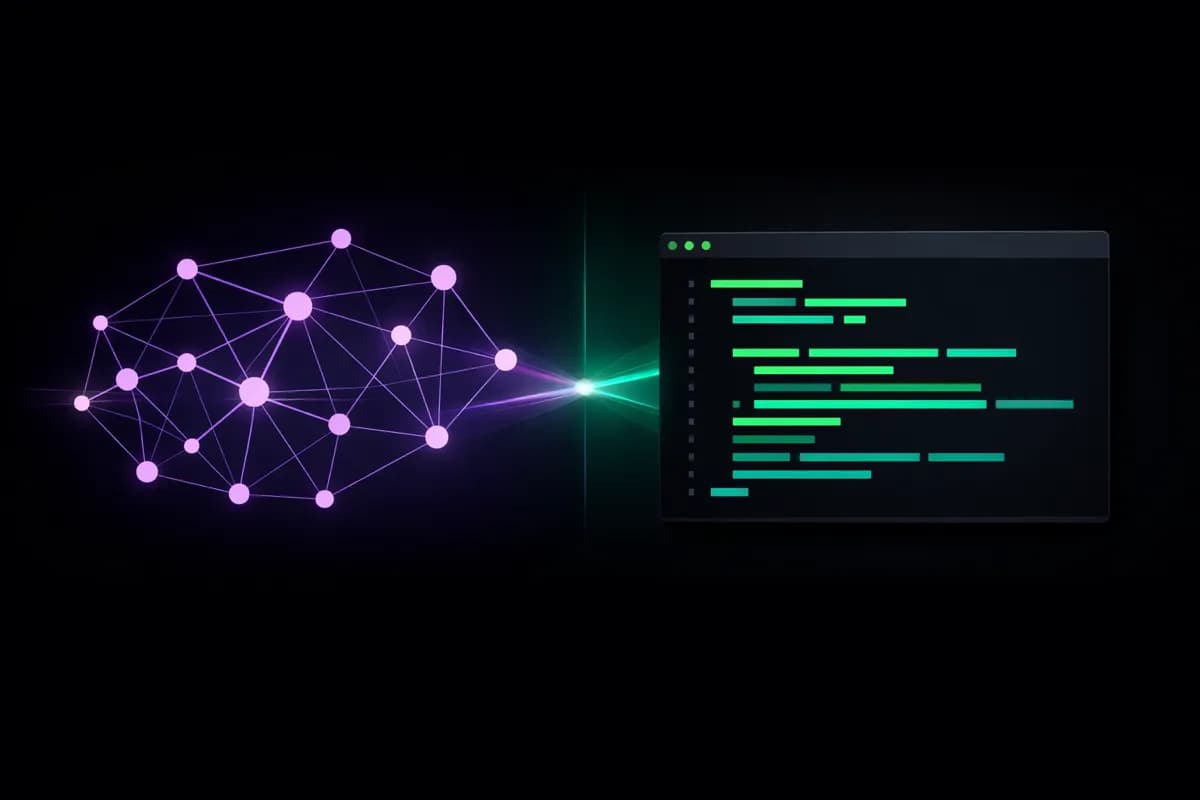
If you're not familiar with Obsidian, it's a free, open-source note-taking tool. Everything is based on .md files stored locally — no proprietary cloud, no opaque database. A folder on your machine, period. But what changes the game is the backlink system. Every note can reference other notes using double brackets, creating a network of connections between your ideas. Obsidian calls this a vault. Visually, it looks like a neural graph — your projects, reflections, meeting notes, hypotheses, everything is interconnected. And it's this relational structure that becomes explosive when you plug in an AI.
The real problem this solves
As a freelancer, I juggle multiple projects, multiple technical contexts. With every new LLM session, I'd start from scratch: re-explain the project, the stack, the constraints, the decisions already made. It's exhausting and it's wasted time. ChatGPT's or Claude's built-in memories are opaque — you don't control what the agent retains. With Obsidian, I decide the context. I have a context file per project, a daily journal, reflection notes. When I launch Claude Code in my vault, it has access to all of it. The result: relevant responses from the very first interaction, no warming up required.
What I''ve actually set up
Within a few days, I structured my vault around three pillars. A context file per project: tech stack, architecture decisions, current state, next steps — everything an agent needs to be immediately useful. A daily journal: a few lines each day about what's moving, what's blocked, ideas that pop up. Nothing formal, just the habit of writing. Reflection notes: articles I've read, patterns I've observed at clients, technical hypotheses I want to dig into. All interconnected with backlinks. When Claude Code reads this vault, it doesn't just see isolated files — it sees the relationships between them.
Markdown: the format LLMs natively understand
It's no coincidence this combo works so well. LLMs are built to process structured text, and Markdown is exactly that: lightweight, readable, versionable with Git. Unlike Notion or Google Docs, your files truly belong to you — no vendor lock-in, no third-party API, no proprietary format. If Obsidian disappears tomorrow, your notes remain: they're plain text files. And most importantly, there's a virtuous circle: the more you write, the richer the vault, the more relevant the agent becomes. The reflective effort you put in today directly amplifies the quality of responses you'll get six months from now.
As Greg Isenberg puts it in the video: '99% of people won't do it.' Writing regularly, structuring your ideas, maintaining a vault — it takes discipline. But that's precisely what makes it an edge for those who stick with it. I'm only at the beginning, but in just a few days, how I work with AI agents has already shifted. I don't re-explain anything. I don't start from zero. And the ideas Claude Code surfaces by cross-referencing my notes are sometimes far better than what I'd have found on my own. If this resonates, watch the video. And download Obsidian. It's free. And if you're looking to integrate AI agents into your workflows or automate your processes, that's exactly what I do — let's talk.